




Energy Storage for EV Charging: Two Gooree Solutions
Planning an electric vehicle (EV) charging station involves more than selecting the number and power ratings of chargers. Grid connection capacity, vehicle arrival patterns and daily electricity demand all influence equipment configuration and site operations. As charging demand grows, a Battery Energy Storage System (BESS) can provide additional flexibility where available grid capacity does not fully match charging requirements.
However, energy storage is not necessary for every EV charging project. Its suitability depends on the site's load profile, grid connection, electricity tariffs, available space and overall project economics. Understanding these factors helps operators determine whether standalone battery storage or an integrated solar-storage-charging solution is the better fit.
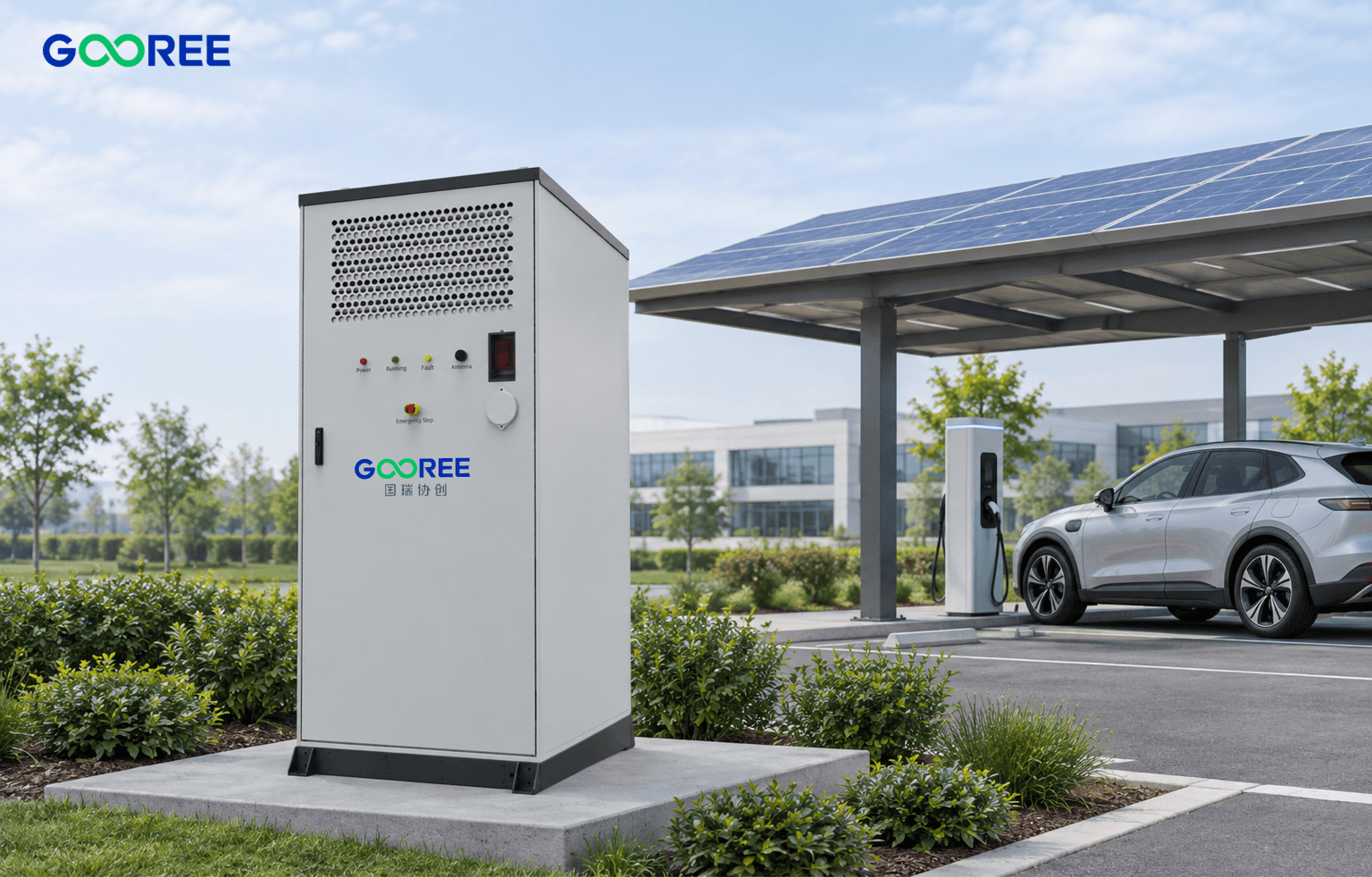
When Does an EV Charging Station Need Energy Storage?
Energy storage is worth evaluating when the site's electricity supply, charging demand or energy costs create operational constraints or opportunities. Four common scenarios illustrate where battery storage may add value.
1. Limited Grid Capacity and High Charging Demand
Some EV charging sites experience short periods when charging demand exceeds the available grid connection capacity. In these situations, battery storage can supply part of the additional power required during peak charging periods.
System sizing needs to consider several factors, including battery output power, discharge duration and the available time and grid capacity for recharging between demand peaks. These factors determine how much additional charging demand the storage system can support.
2. Fluctuating EV Charging Demand
Vehicle arrivals and charging requirements vary throughout the day. A charging station may experience concentrated demand during certain periods and significantly lower demand at other times.
When coordinated with the site's Energy Management System (EMS), battery storage can charge or discharge in response to changes in electricity demand. This provides operators with greater flexibility in managing site energy consumption and coordinating power availability with charging requirements.
3. Electricity Tariffs and Peak Demand Charges
Depending on the local electricity billing structure, energy storage may help shift grid electricity purchases or manage peak demand. This can create opportunities to improve the economics of EV charging station operations.
However, a reliable business case requires more than comparing peak and off-peak electricity prices. The assessment should also account for local tariffs, actual load profiles, system losses, installation costs, and ongoing operation and maintenance expenses.
4. Mismatched Solar Generation and Charging Demand
For EV charging stations with existing or planned photovoltaic (PV) generation, solar output and vehicle charging demand may not occur at the same time.
Battery storage can retain some of the generated solar electricity for later use, helping align PV generation with charging demand. This makes solar-storage integration worth considering when planning EV charging infrastructure with on-site renewable energy.
Tariffs, grid connection regulations and site conditions differ across markets, including China and Europe. Before selecting an energy storage system, project developers should evaluate the actual load profile and compare different options, such as load management, grid capacity upgrades and battery storage.
Approach 1: GR261L Energy Storage for EV Charging
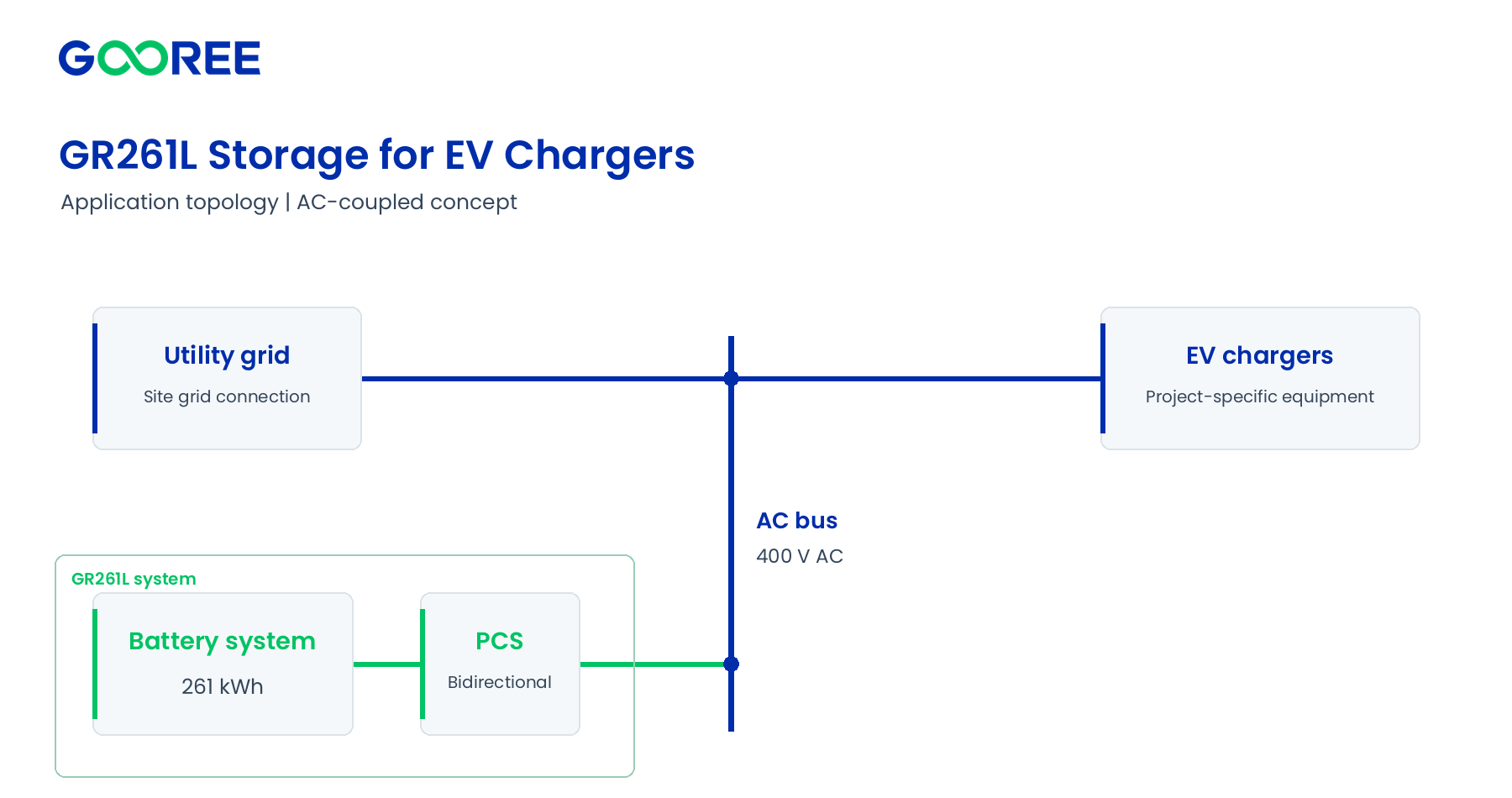
For existing EV charging facilities or projects that require a separately configured battery storage system, Gooree's GR261L energy storage system provides a standalone energy storage option that can work alongside charging equipment and site energy management systems.
Rather than applying a fixed configuration to every project, this approach starts with the site's existing electrical infrastructure. Storage power, battery capacity and operating strategies are selected according to the charging load, available grid connection capacity, equipment interfaces and installation space.
Sweden EV Charging Project
Gooree supplied one GR261L energy storage unit, rated at 130 kW / 261 kWh, for an EV charging project in Sweden.
Gooree engineers provided on-site technical support and completed system commissioning. The project demonstrates how a standalone battery energy storage system can be deployed alongside existing EV charging infrastructure.
Approach 2: GR1000LC Integrated Solar-Storage-Charging Solution
For projects planning solar generation, battery storage and EV charging infrastructure together, Gooree's GR1000LC offers an integrated solar-storage-charging approach.
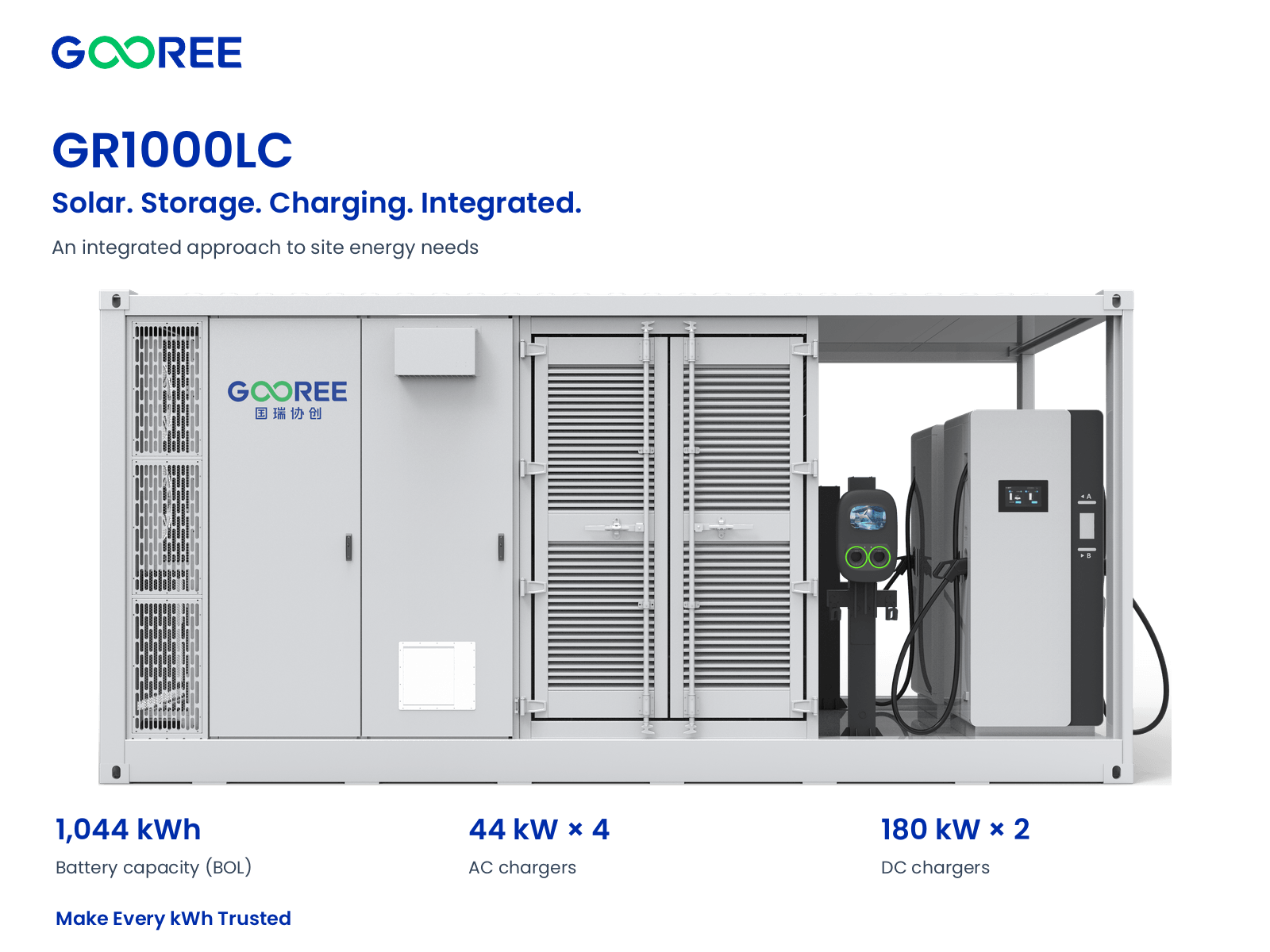
The system combines the battery system, inverter and charging equipment in one solution. Its configuration includes:
- Battery capacity: 1,044 kWh at beginning of life (BOL).
- Thermal management: Liquid cooling.
- AC charging: Four 44 kW AC chargers.
- DC charging: Two 180 kW DC chargers.
By bringing solar connection, energy storage and EV charging equipment into one solution, the GR1000LC allows equipment configuration and energy management to be considered together during project planning.
Actual connection arrangements, equipment operating combinations and control strategies should be determined according to local grid requirements, project specifications and site conditions.
GR261L vs. GR1000LC: Which EV Charging Storage Approach Fits Your Project?
The choice between standalone battery storage and an integrated solar-storage-charging solution depends primarily on the project's existing infrastructure and development plans.
- GR261L standalone storage: Suitable for evaluating additional battery storage at existing EV charging facilities or projects where storage is configured separately from charging equipment.
- GR1000LC integrated solution: An option for projects planning solar generation, battery storage and EV charging as part of an integrated system.
Both approaches require an assessment of the actual charging load, grid connection capacity, available installation space and project budget. Local electricity tariffs and technical requirements should also be considered when evaluating system configuration and operational strategies.
The value of energy storage for EV charging does not simply come from adding battery capacity. It comes from matching available power supply more closely to charging demand and selecting a system configuration that addresses the site's actual requirements.
Contact the Gooree team to discuss battery storage configurations and integrated solar-storage-charging options for your EV charging project.
Make Every kWh Trusted.